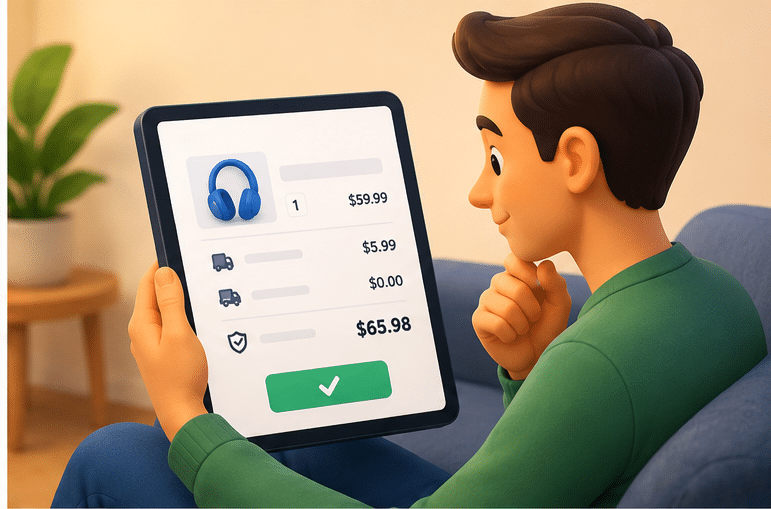
The way ecommerce businesses display pricing is changing and not in a minor way.
Under new guidance linked to the Digital Markets, Competition and Consumers Act 2024, ecommerce pricing transparency in the UK is now a legal requirement, not a best practice. Hidden fees, unclear pricing and last-minute charges are no longer acceptable.
For ecommerce brands, this goes beyond compliance. It directly impacts conversion rates, customer trust and long-term growth.
Here’s what you need to know and what to fix on your website.
What are the New UK Pricing Transparency Rules?
The updated UK ecommerce law pricing rules require businesses to show the total price of a product upfront, clearly and accurately.
This means:
- All mandatory charges must be included
- Pricing must be visible early in the buying journey
- “Drip pricing” (adding unavoidable costs later) is now illegal
This applies to:
- Product pages
- Ads and marketing
- Emails and promotions
- Any “invitation to purchase”
If a customer sees a price, it must reflect what they will actually pay or clearly show how to calculate it.
These requirements are set out in official guidance from the UK government under the Digital Markets, Competition and Consumers Act 2024.
What Does “Total Price Upfront” Actually Mean?
In practice, total price upfront means including all unavoidable costs in the price shown to the customer.
This typically includes:
- VAT
- Mandatory delivery fees
- Booking or transaction charges
- Any required add-ons
If the full price cannot be calculated (for example, location-based delivery), you must:
- Provide clear information on how the price is calculated
- Display it prominently next to the main price
For ecommerce pricing transparency in the UK, the key principle is simple:
No surprises at checkout
Optional extras (like next-day delivery) can still be shown separately, but they must be clearly presented.
Common Examples of Non-Compliance
Many ecommerce websites currently fall short of the new rules, often without realising it.
Here are common issues that now breach UK ecommerce law pricing requirements:
- Delivery costs only revealed at checkout
- Mandatory fees added late in the process
- “From £X” pricing without full clarity
- Subscription costs not clearly explained
- Taxes or service charges hidden until payment
If your site uses any of the above, you may need to act quickly to avoid hidden fees in ecommerce journeys.
What are the Risks for Ecommerce Businesses?
The risks aren’t just theoretical.
If you fail to comply with ecommerce pricing transparency UK rules, you could face:
- Fines of up to 10% of turnover or £300,000
- Orders to compensate affected customers
But beyond legal penalties, the commercial impact is just as serious:
- Loss of customer trust
- Increased cart abandonment
- Lower conversion rates
- Long-term brand damage
In most cases, unclear pricing doesn’t just break the law, it quietly kills performance.
How Pricing Transparency Impacts SEO and Conversions
Pricing clarity is not just a compliance issue, it’s a growth lever.
From an SEO and UX perspective, clear pricing improves user experience by reducing confusion and making it easier for customers to understand the total cost upfront. This leads to fewer drop-offs, lower bounce rates and stronger engagement across the site.
Search engines also favour transparent and helpful content, so unclear pricing can indirectly harm visibility and rankings by creating friction in user experience signals.
More importantly, customers are far more likely to convert when they see the full cost upfront, face no surprise charges and experience a smooth, predictable buying journey.
In short: transparent pricing = higher trust = better conversions
What Ecommerce Websites Need to Check Now
To meet UK ecommerce law pricing standards, you should review the full customer journey to ensure pricing is clear and transparent at every stage.
Product Pages
The full price should be visible immediately, with all mandatory charges included or clearly shown. Delivery information should also be made clear early in the journey.
Basket and Checkout Flow
No new costs should appear late in the process. A clear running total should be shown and pricing must remain consistent from basket to checkout.
Delivery Pricing Visibility
Delivery fees must be shown before checkout. The cheapest mandatory option should be included and any variable costs clearly explained upfront.
Subscription Pricing
Monthly costs should be fully inclusive, contract lengths clearly stated and total costs explained where applicable.
What Ecommerce Websites Need to Check Now
To meet UK ecommerce law pricing standards, you should review the full customer journey to ensure pricing is clear and transparent at every stage.
Product Pages
The full price should be visible immediately, with all mandatory charges included or clearly shown. Delivery information should also be made clear early in the journey.
Basket and Checkout Flow
No new costs should appear late in the process. A clear running total should be shown and pricing must remain consistent from basket to checkout.
Delivery Pricing Visibility
Delivery fees must be shown before checkout. The cheapest mandatory option should be included and any variable costs clearly explained upfront.
Subscription Pricing
Monthly costs should be fully inclusive, contract lengths clearly stated and total costs explained where applicable.
WooCommerce and Platform Considerations
For many businesses, pricing display depends on platform setup, especially WooCommerce pricing configurations.
Key things to consider:
- Some updates may be handled automatically by plugins
- Others will require manual configuration
- Outdated plugins may not support compliant pricing structures
This creates a system dependency risk, where pricing accuracy relies on plugins, themes and extensions working correctly. If not maintained, they can lead to incorrect or non-compliant pricing.
You should review:
- Delivery calculators
- Dynamic pricing tools
- Subscription plugins
- Cart and checkout logic
If you rely on WooCommerce, ensure your setup supports UK ecommerce law pricing requirements and helps avoid hidden fees in ecommerce journeys.
Turning Compliance Into a Conversion Advantage
Most businesses see this as a legal hurdle.
In reality, it’s an opportunity.
Transparent pricing:
- Builds immediate trust
- Reduces friction in the buying process
- Improves conversion rates
- Differentiates your brand from competitors
In a market where customers are increasingly sceptical, clarity becomes a competitive edge.
The brands that win won’t just comply, they’ll use transparency to grow.
FAQs
What is drip pricing in ecommerce?
Do I have to include delivery in product prices?
Does this law apply to small ecommerce businesses?
Can pricing still vary at checkout?
Final Thoughts
The shift towards ecommerce pricing transparency in the UK is about more than compliance, it’s about aligning with how customers expect to buy.
If your pricing isn’t clear, complete and visible early, you’re not just at legal risk, you’re losing revenue.
Now is the time to audit your site, fix gaps and remove friction from your purchase journey.
At UClimb, we help businesses audit pricing and checkout flows, improve WooCommerce pricing display, remove hidden friction points and increase conversions through better UX.
Get in touch to review your site and turn compliance into growth.
Final Thoughts
The shift towards ecommerce pricing transparency in the UK is about more than compliance, it’s about aligning with how customers expect to buy.
If your pricing isn’t clear, complete and visible early, you’re not just at legal risk, you’re losing revenue.
Now is the time to audit your site, fix gaps and remove friction from your purchase journey.
At UClimb, we help businesses audit pricing and checkout flows, improve WooCommerce pricing display, remove hidden friction points and increase conversions through better UX.
Get in touch to review your site and turn compliance into growth.