


How Keyword Clustering Helps You Target Multiple Related Searches
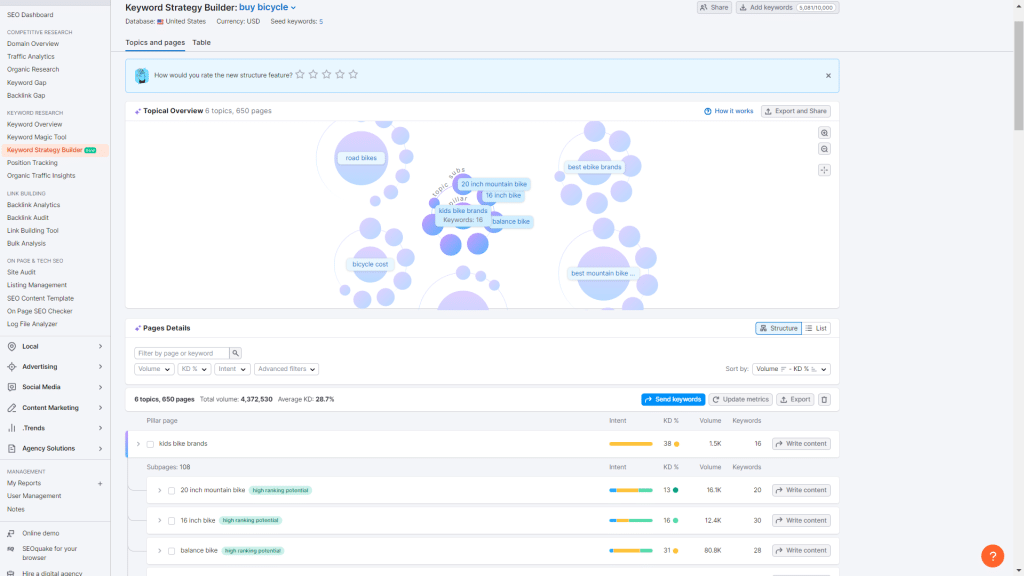
Keyword clustering refers to the practice of organising closely related search terms into groups. By doing this, you can develop content that addresses several relevant keywords at once. This increases the likelihood of your business appearing in search results for a variety of related queries.
For example, a Bristol based bakery could group together terms such as “wedding cakes in Bristol”, “birthday cakes in Bristol”, and “custom cakes in Bristol” to form a cluster.
Tools like SEMrush or Ahrefs allow you to discover related phrases and arrange them accordingly. This strategy helps ensure your content thoroughly addresses different types of user intent within a specific topic area:
How to Use Local Content Marketing to Boost Your Local SEO
Content marketing is a powerful tool for improving your local SEO. By creating high quality, locally focused content, you can attract more local traffic, engage your audience, and establish your business as a local authority.
1. Localised blog posts
Create blog posts that address local events, news, and issues relevant to your community. This not only helps you rank for local keywords but also builds a connection with your audience.
Example: A dentist in Birmingham could write about “Top 10 Dental Care Tips for Residents of Birmingham.”
2. Case studies and testimonials
Showcase your success stories and customer testimonials to build trust and credibility. Highlighting local customers and their experiences can help you attract more local clients.
Example: A home improvement company in Leeds could feature a case study on a recent kitchen renovation project in a specific neighbourhood.
3. Collaborate with local influencers
Partnering with local influencers or bloggers can help you reach a wider audience and improve your local SEO. Influencers can provide valuable backlinks and social proof, boosting your online visibility.
Example: A restaurant in Edinburgh could collaborate with a local food blogger to review their menu and share it with their followers.
Advanced On-Page Optimisation Techniques
Beyond basic keyword optimisation, there are advanced on-page SEO techniques that can further enhance your local SEO efforts.
Local Link Building Strategies
Securing authoritative backlinks from regionally relevant websites plays a key role in enhancing local search visibility. Below are practical approaches to local link acquisition.
1. Collaborate with neighbouring businesses
Form alliances with nearby companies to mutually share backlinks. This may involve contributing content to each other’s blogs, jointly organising local functions, or sponsoring public initiatives.
Example: A gym in Sheffield might team up with a nearby dietician to trade blog content and reciprocal backlinks.
2. Register with regional directories
Make sure your company appears in trusted local listing platforms, such as Yelp, Yellow Pages, and your local chamber of commerce website. These entries not only offer backlink value but also expand your digital footprint.
Example: Add your dental surgery to online directories for local medical services and neighbourhood business listings.
3. Utilise local media opportunities
Appearing in coverage from local journalists or media sources can generate high quality backlinks and build trust with potential clients. Proactively connect with local reporters and offer expert commentary on timely topics.
Example: A neighbourhood patisserie might contribute tips for a festive baking piece and receive a backlink from the publishing outlet.
Why Local Keyword Research Is Important
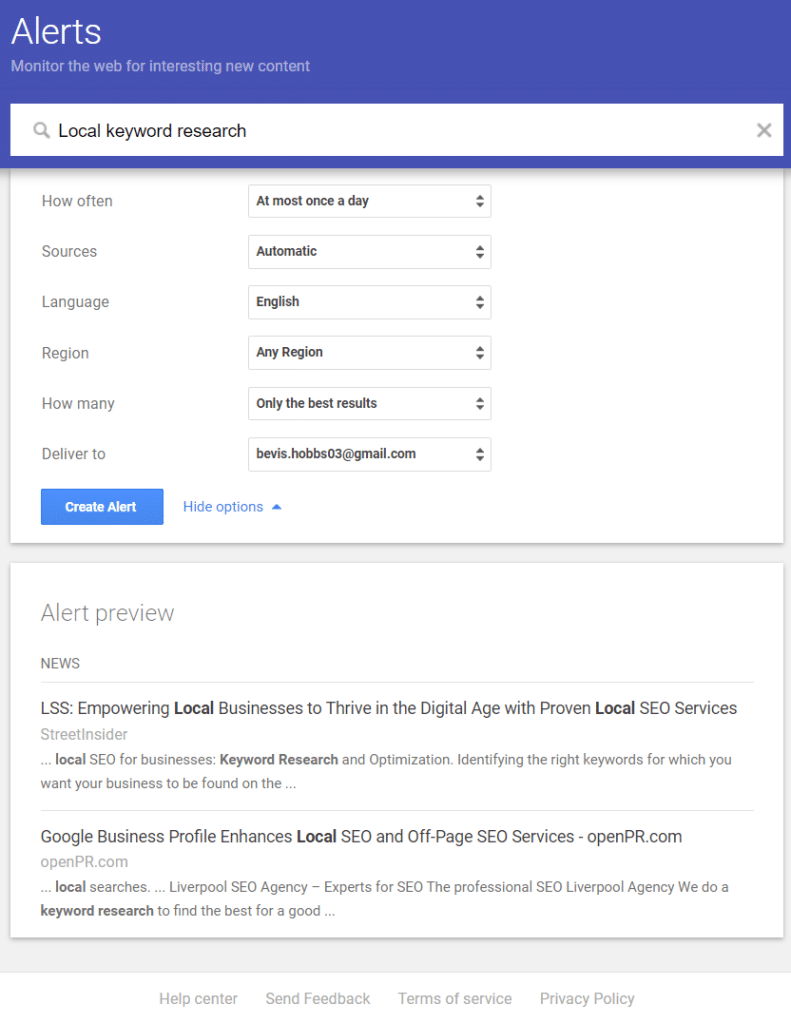
Conducting keyword research with a local focus is essential due to the following points:
- Relevant visitors: Selecting and appearing for appropriate search phrases enables businesses to draw in individuals who are already looking for their specific products or services, which typically leads to improved conversion outcomes. Focusing on the most suitable keywords provides the groundwork for a successful approach to local SEO.
- Optimised content: It helps businesses create content that aligns with their audience’s search intent, boosting user engagement and satisfaction.
- Competitive advantage: By understanding the keywords your competitors are targeting, you can identify gaps and opportunities to enhance your SEO strategy.
- Better user experience: Tailoring your website’s content to meet local search needs improves the user experience, leading to higher retention rates and increased customer loyalty.
With a carefully researched list of target SEO keywords, businesses can focus on the most relevant terms, expand their keyword coverage, and capture valuable variations of key search phrases, boosting their organic visibility across search engines.
How to Get Started With Local Keyword Research In 5 Steps
Local keyword research is a multi-step process, each stage playing a vital role in crafting a robust and effective SEO strategy. Below are five key steps to help you succeed:
Step 1: Identify your core terms
Your core terms define the essence of your business and represent the main products or services you offer.
- Idea generation: Begin by creating an inventory of every product or service your business delivers. If you’re working on behalf of a client, ask for a detailed breakdown to make sure nothing is unintentionally excluded. If the list is too long, prioritise areas where your business stands out or holds the strongest growth opportunity, then refine your focus to concentrate on core services.
- Develop concepts further: Use platforms like Ahrefs Keywords Explorer to build on your original list. Enter your primary offerings into the tool and explore sections such as “Having same terms” to discover more keyword variations that could otherwise go unnoticed.
- Refine your list: Work with your team or client to review the expanded list, confirming it accurately reflects the services or products you provide. This step ensures your keyword strategy is both comprehensive and aligned with your business goals.
Example:
- A local hair salon’s core terms might include “hairdresser,” “haircut,” and “hairstylist.”
- A law firm’s core terms might be “lawyer,” “law firm,” and “attorney.”

Step 2: Add keyword modifiers
Keyword modifiers enhance your core terms by making them more specific and often less competitive, helping you refine your keywords to better match what potential customers are searching for.
- Specificity and relevance: Modifiers can include adjectives, locations, or phrases that narrow the search intent.
Example: A hair salon might use phrases like “best hairdressers near me,” “hairdressers in [your town name],” or “affordable hairstylist.”
- Tool application: Make use of keyword research platforms like Ahrefs or Google Keyword Planner to discover frequently used descriptive words. These platforms offer data on search frequency, ranking difficulty, and terms related to your focus.
Including descriptive modifiers enhances your keyword approach by enabling you to pursue longer, less competitive search terms that may be easier to achieve rankings for.

Step 3: Check for local intent
Local intent is a critical component of local SEO, focusing on the searcher’s intent to find services or products in a specific area. Identifying keywords with local intent ensures your SEO efforts are aimed at users who are actively looking to engage with local businesses.
How to Identify Keywords with Local Intent:
- SERP analysis: Conduct a Google search for your services and review the results. If a map pack (a set of local business listings and a map) or other local business results appear, this indicates local intent.
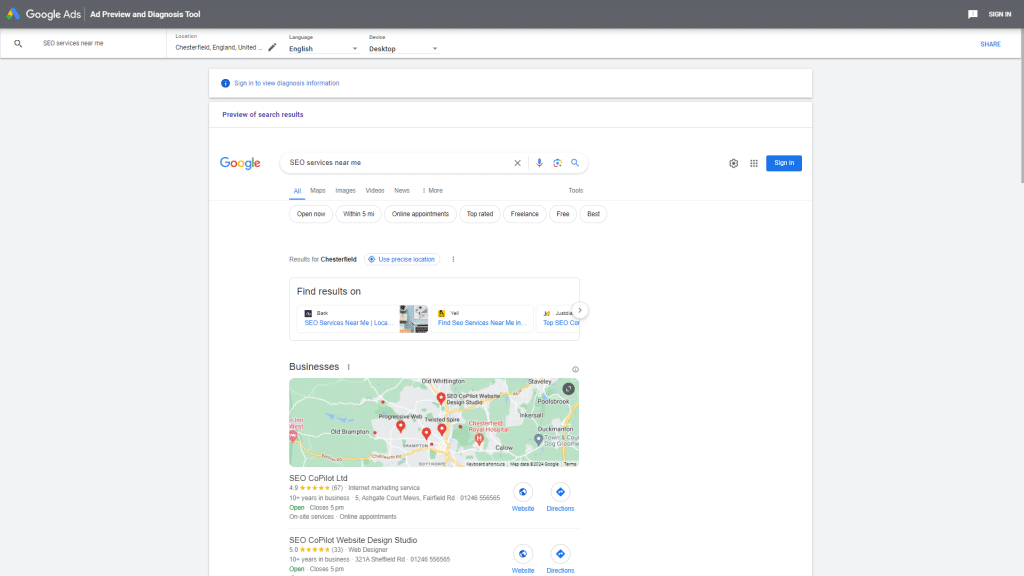
- Google’s ad preview tool: For businesses outside your current location, use the Google Ad Preview Tool to simulate searches from the target area. This allows you to verify whether your keywords trigger local intent indicators like map packs or local listings.
Example: Simulating a search for “SEO services near me” in Chesterfield with Google’s Ad Preview Tool reveals a clear indication of local intent. The map pack and listings of SEO service providers confirm that potential customers in Chesterfield are being effectively targeted. This tool is invaluable for businesses working remotely from their target location, ensuring their services appear in local search results.
What Do Local Intent Keywords Look Like?
Local intent keywords typically include geographic indicators such as:
- “Near me”
- Specific city or town names
- Regional terms
These keywords signal that users are searching for local services, making them indispensable for businesses aiming to connect with nearby customers.
By incorporating local intent keywords into your strategy, you can align your SEO efforts with the needs of users actively searching for businesses in your area.
Step 4: Add Your Locations
Adding locations to your keywords is crucial for targeting local searchers effectively. This involves incorporating the names of towns, states, counties, and communities where your business operates.
- Location-based keywords: Merge your main keyword phrases with geographical qualifiers. For instance, phrases like “top-rated hair stylist in Sheffield” or “injury solicitor based in Derbyshire”.
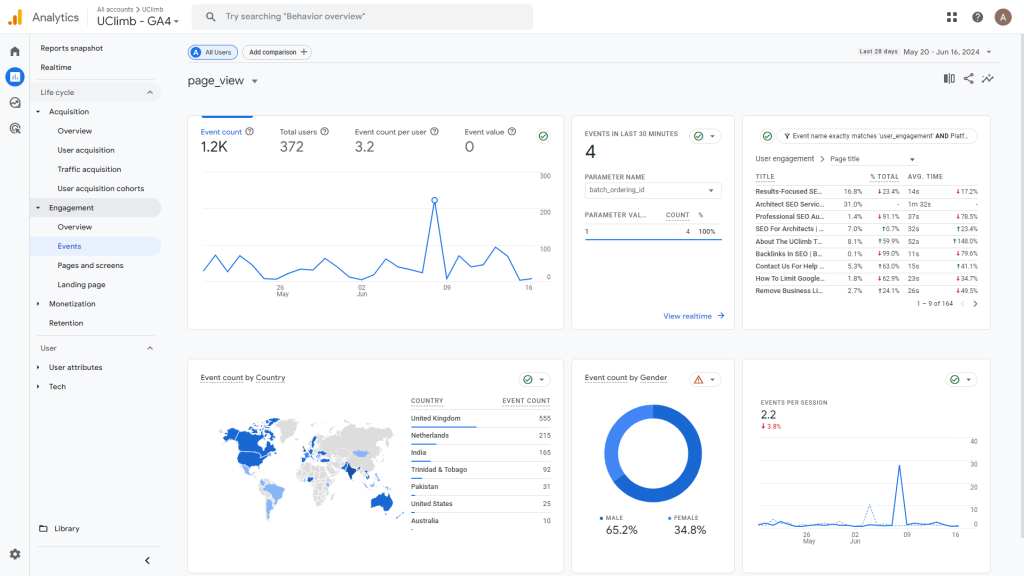
- Analytical tools: Platforms such as Google Analytics helps you to discover which regions are contributing the most visitor traffic. These insights allow you to fine-tune your list of keywords to prioritise locations that yield the best results.
Step 5: Categorise your keywords by user intent
User intent represents what a searcher hopes to accomplish when they type in a query. Organising your keyword terms by this intent supports the creation of content that aligns closely with their expectations and needs.
- Commercial intent: These keyword terms show that the searcher is prepared to take a specific action, such as completing a purchase or arranging a service. Examples include “purchase hair products in London” or “schedule a haircut session.”
- Informational intent: These keywords are used when users are seeking information or answers to their questions. Examples include “how to choose a lawyer” or “best haircuts for long hair.”
- Navigational intent: These keywords are used when users are looking for a specific website or brand. Examples include “XYZ Salon website” or “ABC Law Firm contact details.”
By assigning keywords to one of these three types of intent, you can better understand how and when each keyword should be used. For example, informational keywords might be the focus of a blog post, while commercial keywords could be targeted on a product or service page.
Utilising Keyword Research for Local SEO
After compiling a thoroughly researched, relevant, and current collection of keywords, the next step is to put them to work in improving your local SEO. This means developing content that incorporates these terms and adjusting your website’s layout to align with your optimisation plan.
Creating Landing Pages
One of the most effective ways to use your keyword research is by creating targeted landing pages. Each landing page should focus on a specific set of keywords to ensure it ranks well for those terms.
- Dedicated pages: Create specific pages for different services based on keyword analysis.
Example: Separate pages for “boiler installation” and “oil boiler installation” if they serve different search intents.
- Content quality: Ensure that each landing page provides valuable and relevant information to the visitor. This not only helps in ranking but also improves user engagement and conversion rates.
Example: A local plumbing service might create separate pages for “emergency plumbing services in Bristol” and “bathroom plumbing installation in Bristol.” Each page would be optimised for the relevant keywords and provide detailed information about the specific service.
Blog Posts and Informational Content
While blog posts might not seem directly relevant to local SEO, they can play a crucial role in driving traffic and building authority.
- Identify relevant topics: Use keyword research to find topics your local audience cares about. This might not always have local intent but can still attract a relevant audience.
- Informational content: Write blog posts that answer common questions or solve problems related to your services. For example, a law firm could write articles on “how to choose the right lawyer” or “understanding personal injury claims.”
Blog posts can help attract visitors who are in the research phase of their buying journey. By providing valuable information, you can build trust and establish your business as an authority in your field.
Leveraging User Behaviour and Analytics
Understanding user behaviour and leveraging analytics tools is essential for refining your local SEO strategy.
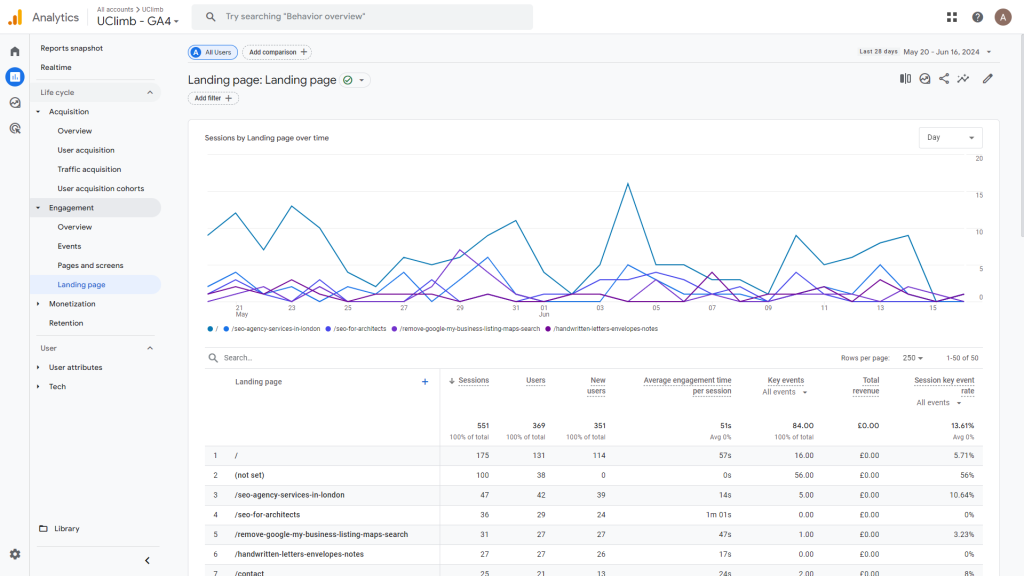
- Use Google Analytics: Google Analytics allows you to observe how your chosen keywords and destination pages are performing. The platform offers valuable details on which search terms attract visitors, which pages receive the most attention, and the origins of your audience.
- Make adjustments based on data: Keep a consistent watch on performance metrics and refine your approach in response. If particular keywords or landing pages aren’t delivering expected results, analyse the root causes and apply suitable updates. This might mean revising the page copy, incorporating additional keywords, or enhancing usability for site visitors.
Tracking Local Keyword Rankings
Keeping track of your keyword positions in local searches is essential for evaluating your SEO efforts and implementing improvements when needed.
- Use position tracking tools: Leverage platforms such as Ahrefs’ Rank Tracker to observe how your keywords are performing. Make sure to specify your geographic location for precise insights into local rankings. These platforms allow you to gauge how your site appears in local search outcomes for the keywords you’re targeting.
- Frequent revisions are important: Routinely refresh your keyword selection and assess shifts in search behaviour to maintain a competitive edge. SEO is a continuous effort, not a set-and-forget job, and it demands consistent review and refinement.
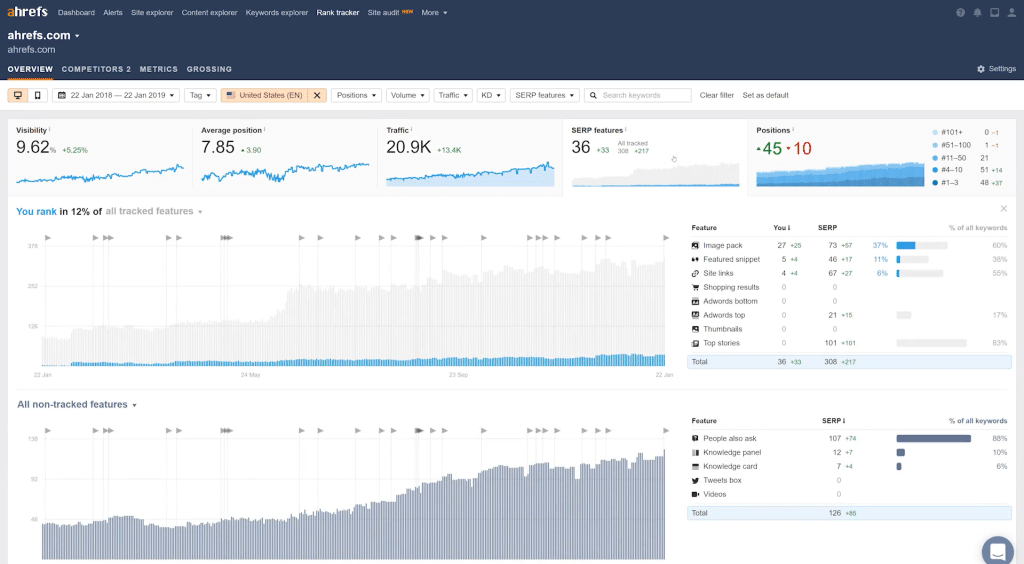
By leveraging location-specific data through Ahrefs, the site aligns its SEO efforts with local search trends, ensuring a competitive edge. Regular monitoring and adaptation to evolving search behaviours allow for continued optimisation and sustained success.
How to Optimise Your SEO Strategy for Multiple Business Location
If your business operates in multiple locations, it’s essential to tailor your SEO strategy to each one. Different locations often have unique search behaviours and keyword opportunities, making a one-size-fits-all approach ineffective.
Location-Specific SEO Strategies
Location pages: Create dedicated landing pages for each location. Optimise these pages with local search terms to target relevant audiences. This ensures each page addresses the specific needs and search habits of its target audience.
Example: A branch in Bristol could use keywords like “best plumber in Bristol.” A branch in Birmingham might focus on “emergency plumbing services in Birmingham.”
Contact page listings: For businesses with only a handful of locations, listing all addresses on a single contact page can be a practical alternative. Ensure each address is optimised with relevant local search terms and includes key details such as:
- Phone numbers
- Operating hours
- Directions
How Great User Experience Drives Better Local SEO Performance
Optimising for local SEO is about delivering an exceptional user experience as well as ranking highly for your target keywords. Google considers user experience signals, like mobile responsiveness and page speed, when ranking websites. A well designed, user friendly site can significantly boost both your SEO performance and customer satisfaction.
Key Factors to Prioritise:
- Mobile optimisation: Ensure your website is fully mobile-friendly. Since many local searches are conducted on mobile devices, your site must load quickly and display seamlessly across all screen sizes.
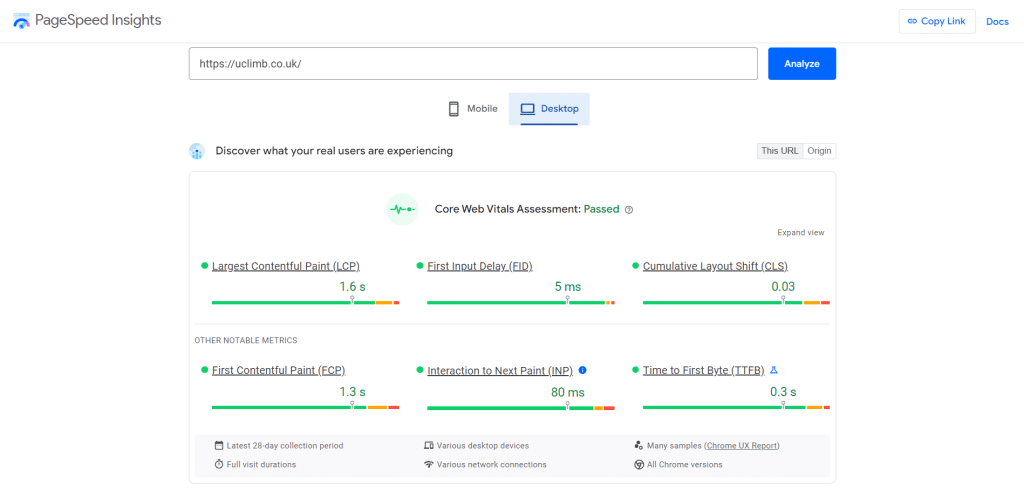
- Fast loading times: Page speed is a vital aspect of user experience and SEO. Use tools like Google PageSpeed Insights to identify and fix any speed-related issues. Faster websites improve user retention and satisfaction.
- Easy navigation: Simplify your website’s structure so visitors can quickly access essential information such as contact details, service pages, or blog posts. An intuitive layout encourages longer visits and reduces bounce rates.
Optimise Your Local SEO with These Must Have Tools
Several tools can streamline your local keyword research and enhance your overall SEO strategy. Here’s an overview of popular tools and how they can support your efforts:
Ahrefs
Ahrefs is a powerful all-in-one SEO tool packed with features to boost your local SEO.
- Keywords explorer: Discover keyword ideas, analyse search volumes, and evaluate keyword difficulty. It’s especially helpful for finding keyword modifiers and long-tail keywords.
- Site explorer: Gain insights into competitors’ websites, including their keyword strategies and backlink profiles, to identify opportunities for improvement.
- Rank tracker: Monitor your keyword rankings over time to track progress and refine your strategy.
Google Analytics
Google Analytics is essential for understanding your website’s performance and user behaviour.
- Audience insights: Dive into user demographics, interests, and behaviours to tailor content that resonates with your audience.
- Traffic sources: Identify where your visitors come from: organic search, direct traffic, referrals, or social media, in order to pinpoint high-performing channels.
- Conversion tracking: Set up goals to measure specific actions, like form submissions or purchases, and evaluate your SEO efforts’ effectiveness.
Google My Business (GMB)
Optimising your Google My Business profile is a cornerstone of local SEO.
- Profile optimisation: Keep all business details accurate and up-to-date, including your name, address, phone number, website, hours, and services.
- Customer reviews: Encourage happy customers to leave reviews and respond promptly to all feedback. Positive engagement boosts your local rankings and shows you value your customers.
- Regular updates: Post updates, photos, and promotions regularly to keep your profile fresh and engaging.
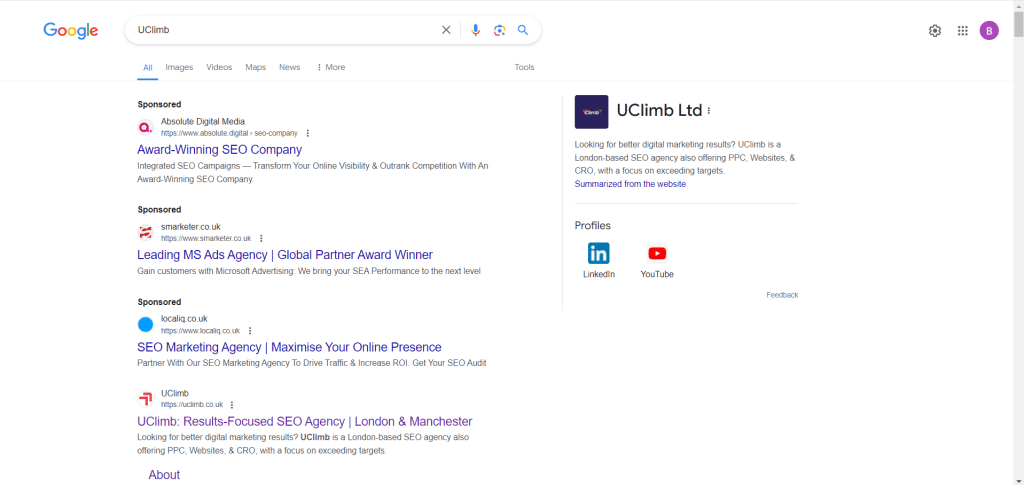
Example: Google search for “UClimb” demonstrates the visibility of UClimb Ltd’s well-optimised GMB profile, highlighting key business details and links. Competing sponsored results underscore the importance of maintaining an active and accurate profile to stand out.
Moz Local
Moz Local ensures your business information is consistent and accurate across the web.
- Listing management: Manage your presence across platforms like Google, Facebook, and Bing with ease.
- Review monitoring: Track and respond to reviews from multiple sources in one place to maintain a strong online reputation.
- Local SEO reports: Receive detailed insights into visibility, rankings, and listing accuracy to refine your local SEO efforts.
Using these tools can simplify your local SEO strategy, ensuring that your business remains visible, competitive, and well-positioned to attract local customers.
Targeting Counties and Towns to Maximise UK Local SEO
The structure of local keyword research can be significantly influenced by the unique geographical hierarchy of counties and towns. Understanding this hierarchy is crucial for businesses aiming to optimise their local SEO strategies effectively.
Within the UK counties represent larger administrative regions, each encompassing multiple towns and cities. When conducting local keyword research, it’s important to recognise the distinction between targeting keywords for an entire county versus specific towns within that county. This differentiation can impact your visibility and relevance in local search results.
Approach One: Targeting Counties
When targeting counties, businesses can reach a broader audience, covering multiple towns and cities within the region. This approach is particularly beneficial for services that cater to a wide area.
Example: A pest control company might target keywords like “pest control services in Kent” or “pest exterminator in Cornwall.” By doing so, they ensure visibility across the entire county, capturing potential customers from various towns.
Approach Two: Targeting Towns
Conversely, targeting specific towns allows for a more focused and localised SEO strategy. This approach is ideal for businesses that serve a more defined geographical area.
Example: A local bakery might use keywords such as “artisan bakery in Brighton” or “best cakes in Cheltenham.” This specificity helps in attracting customers who are searching for services within a particular town, leading to higher conversion rates and more relevant traffic.
Combining Both Approaches:
A balanced strategy that incorporates both county-wide and town-specific keywords can maximise a business’s reach and effectiveness in local search results. By creating dedicated landing pages for each town while also having broader pages for county-level searches, businesses can cater to diverse search intents and geographical scopes.
How to Implement These Strategies
To effectively implement this strategy, businesses should:
- Carry out in-depth research: Make use of platforms such as Google Keyword Planner and Ahrefs to discover keywords that apply to both counties and specific towns.
- Produce targeted content: Build individual landing pages and blog entries that focus on keywords relevant to counties as well as those tied to towns. Make sure each page includes tailored text, accurate meta information, and structured headings.
- Track results: Employ tools like Google Analytics and local SEO software to examine how your keywords perform at both regional and local levels. Refine your plan using this insight to increase reach and user interaction.

Advanced Strategies for Local Keyword Research
Expanding upon the fundamental principles of local keyword research, there are advanced strategies and tactics that can significantly enhance your local SEO efforts. These strategies involve a deeper understanding of user behaviour, leveraging advanced tools, and implementing cutting-edge techniques to stay ahead of the competition. This section will cover advanced keyword research strategies, the role of voice search, and how to leverage local content marketing to boost your local SEO.
Advanced Keyword Research Techniques
Semantic Search and LSI Keywords
Semantic search refers to how search engines interpret the meaning and user intent behind a search, moving beyond simply matching the specific words typed in. Latent Semantic Indexing (LSI) keywords are associated terms linked to your main keyword that assist search engines in grasping the overall relevance and subject matter of your content.
Example: If your primary keyword is “plumber in London”, LSI keywords might include “emergency plumbing services”, “boiler repair” and “pipe installation.”
Utilising LSI (Latent Semantic Indexing) keywords can significantly boost the topical relevance of your content, thereby increasing the likelihood of ranking well for a variety of related search terms. Tools such as LSI Graph and Google’s search suggestions can assist you in identifying these valuable LSI keywords.


