
The short version
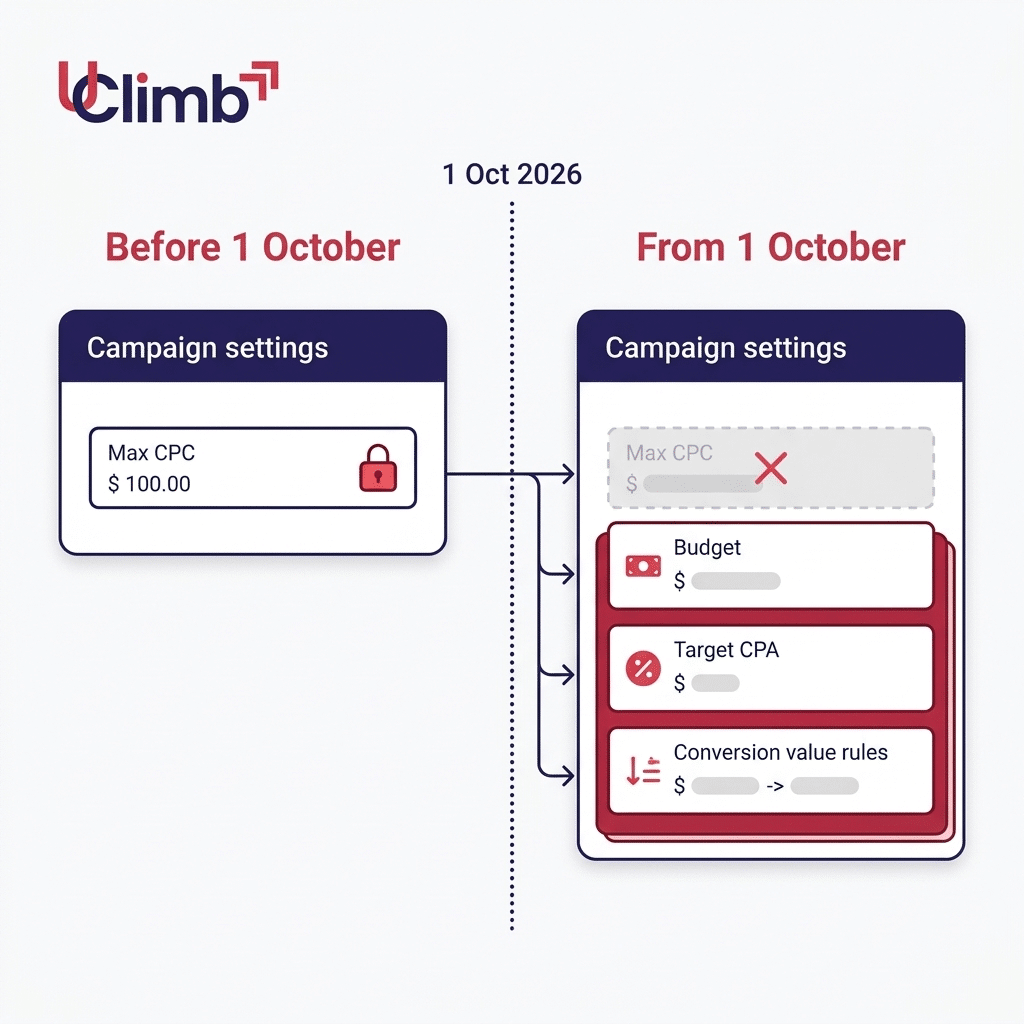
From 1 October 2026, you will not be able to set a Max CPC when creating new standalone Maximise Conversions, Maximise Conversion Value or Maximise Clicks campaigns in Microsoft Advertising. Existing campaigns keep theirs. Portfolio bid strategies keep it too.
| Question | Answer |
|---|---|
| What is changing? | Max CPC disappears from campaign creation for new non-portfolio campaigns |
| When? | 1 October 2026 |
| Which strategies? | Standalone Maximise Conversions, Maximise Conversion Value, Maximise Clicks |
| What keeps the cap? | Portfolio bid strategies, Target Impression Share, Enhanced CPC |
| Do existing campaigns lose it? | No, not on 1 October. Microsoft has said further updates will follow |
| How urgent? | Three weeks. The useful work happens before the deadline, not after |
In this article
- What changed
- Who is affected
- Why this matters
- What to do before 1 October
- The portfolio escape hatch
- Is your conversion data ready
- The three-week plan
- FAQs
What changed
Microsoft Advertising emailed advertisers on 20 August 2026 with the subject line “Updates to Max CPC for new campaigns”. Navah Hopkins, the Microsoft Advertising Liaison, posted the same detail on LinkedIn the same day.
From 1 October 2026, Max CPC will not be available when creating new non-portfolio campaigns on three standalone bidding strategies: Maximise Conversions, Maximise Conversion Value and Maximise Clicks.
Microsoft’s stated reason is that a Max CPC overrides the goal you have already given the system, and can cause spend pacing irregularities. The company’s position is that advertisers using conversion-based bidding with targets hit their goals more easily than those relying on what Hopkins called legacy controls.
What keeps the cap and what loses it
| Bid strategy | Max CPC on new campaigns from 1 October |
|---|---|
| Maximise Conversions (standalone) | Removed |
| Maximise Conversion Value (standalone) | Removed |
| Maximise Clicks (standalone) | Removed |
| Any portfolio bid strategy | Retained |
| Target Impression Share | Retained |
| Enhanced CPC | Retained |
| Any campaign created before 1 October | Retained |
That table contains the most useful fact in this entire story, and it is the one the headlines buried. Portfolio bid strategies keep the cap. More on what that is worth below.
What has not been said
Two things are genuinely unresolved, and it is worth being precise about them rather than filling the gap with assumption.
Microsoft said further updates on Max CPC would be provided in future. Read plainly, that is a strong hint that existing campaigns are exempted for now rather than permanently. Nobody outside Microsoft knows the timetable.
Microsoft Advertising Editor will also lose the setting, but no date has been announced. An API update is expected later, again with no published date. If you have seen a specific date for either, it has not come from Microsoft.
Who is affected
| Account type | Exposure | Why |
|---|---|---|
| Lead generation with sparse conversion data | High | Fewer conversions means the algorithm has less to work with, and the cap was doing real work |
| Accounts built via Google Import | High | Imported campaigns often carry over caps set for Google’s auction, not Microsoft’s |
| High-CPC competitive sectors | High | Legal, finance, insurance, trades. A single runaway click is material |
| Ecommerce with strong conversion volume | Moderate | Usually the best case for handing over control |
| Accounts already running without caps | Low | Nothing changes for you |
| Accounts on portfolio strategies | Low | Cap retained |
If you manage a portfolio of accounts, start with the first three rows. The common factor is not spend, it is data density. Thin conversion data plus no cap is the combination that produces an uncomfortable Monday morning.
Why this matters
1. The cap was doing a job nobody wrote down
Max CPC is rarely part of a documented strategy. It gets set once, at build, by someone who wanted a safety net, and it never gets revisited.
That makes it the hardest kind of control to remove safely, because no one can tell you what it was protecting against. You find out afterwards.
2. Google Import carries assumptions across an auction boundary
Microsoft’s own PPC offering, and a large share of the industry’s, runs on weekly Google Import syncs. That is efficient, and it is also how a Max CPC calibrated for Google’s auction ends up governing bids in Microsoft’s, where CPCs are typically lower and the competitive set is different.
Accounts built this way often have caps that were never deliberately chosen for Microsoft at all. When the cap disappears from new campaigns, those accounts lose a control that was arbitrary to begin with, which cuts both ways: less protection, but also less accidental throttling.
3. Your conversion data is now load-bearing
Removing a cost ceiling shifts the entire burden of restraint onto conversion signals, targets and budgets.
If your conversion actions include a mix of genuine leads and low-value form fills, if you have never set conversion values, or if you are counting every conversion rather than one per click where that is appropriate, the algorithm is optimising towards a distorted picture. It was doing that before too. The difference is that the cap was quietly limiting the damage.
4. You lose the ability to run this experiment cleanly after the deadline
This is the part with a countdown on it.
Right now you can take an existing campaign, remove the Max CPC, watch what happens, and put it back if the answer is unpleasant. After 1 October, that reversibility is not something you should assume you still have on newly created campaigns, because the field is gone at creation.
Hopkins explicitly encouraged advertisers to run optimisation experiments removing existing Max CPC before the deadline, precisely so you learn the answer while the stakes are low.
The honest counterweight
Microsoft’s argument is not spin, and treating it as such would be a mistake.
A Max CPC set below the market clearing price for a keyword does not save you money. It stops you entering auctions you would have won profitably, which shows up as thin impression volume and an underspending campaign rather than as an obvious problem. Plenty of accounts carry a cap that is actively costing them conversions, and their owners have no idea because the symptom looks like nothing at all.
For accounts with dense conversion data and honest values, removing the cap is often the right call regardless of what Microsoft does. The change is a deadline for a decision many advertisers should have made anyway.
What to do before 1 October
Three weeks is enough time to do this properly. It is not enough time to start on 29 September.
Step 1: Inventory every campaign using a Max CPC
In the Microsoft Advertising interface, add the Bid strategy column to your campaigns view and export. You want, for every campaign: bid strategy, whether a Max CPC is set, the value, average CPC over the last 90 days, and conversion volume over the same window.
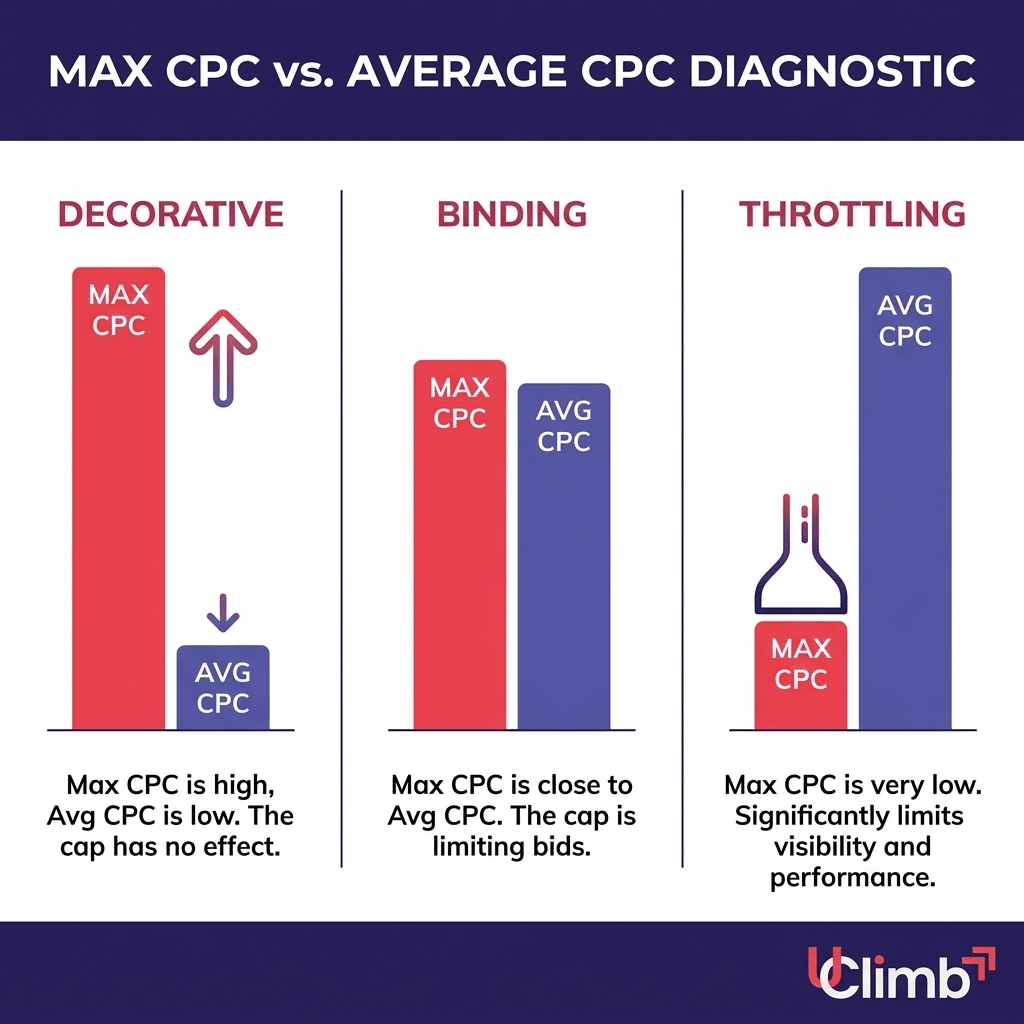
The single most revealing figure is the gap between the cap and the actual average CPC. It tells you whether the cap is binding or decorative.
| Gap between cap and average CPC | What it means | Action |
|---|---|---|
| Cap is far above average CPC | Decorative. Rarely if ever binding | Safe to remove. Low risk |
| Cap is slightly above average CPC | Binding at the edges, shaping the auction | Test properly before removing |
| Cap is at or below average CPC | Actively throttling delivery | You may be losing volume. Test urgently |
Step 2: Run the experiment properly
Microsoft’s advice to run an experiment is right. The advice is also where most people will stop reading, so here is what a defensible test actually looks like.
Use Microsoft’s optimisation experiments to create a variant of an existing campaign with the Max CPC removed, then hold everything else constant.
Split: 50/50. A smaller variant split takes longer to reach a readable result, and you do not have longer.
Duration: run for a minimum of two full weeks, and always in whole weeks. Weekday and weekend performance differ enough that a ten-day test is a coin toss dressed as data.
Sample: if the campaign does not generate at least 30 conversions in a fortnight, the test will not tell you anything reliable about cost per conversion. Test on your highest-volume campaigns first and infer cautiously for the rest.
Judge on: cost per conversion and conversion volume together, plus impression share lost to rank. Never judge on average CPC alone. Average CPC rising while cost per conversion falls is the change working exactly as intended, and an advertiser watching only CPC will kill a winning test.
Guardrail: set a campaign budget you are genuinely willing to lose in a fortnight, because the budget is now the real ceiling. That is the point of the exercise.
Step 3: Document why each remaining cap exists
For every campaign where you decide to keep the cap, write down the commercial reason in one sentence and store it with the account documentation.
This sounds like bureaucracy. It is the thing that stops someone removing a cap in eight months’ time because it looked untidy, and it is the record you need when a client asks why one campaign behaves differently from the rest.
The portfolio escape hatch
Here is the practical answer nobody is leading with.
If a client genuinely requires a hard CPC ceiling on new campaigns after 1 October, put the campaign in a portfolio bid strategy. Portfolio strategies retain Max CPC for both new and existing campaigns.
That is a real workaround, and it comes with real trade-offs worth stating honestly:
| Consideration | Standalone strategy | Portfolio strategy |
|---|---|---|
| Max CPC after 1 October | Not available on new campaigns | Available |
| Bidding optimised across | One campaign | All campaigns in the portfolio |
| Budget control | Per campaign | Per campaign, with shared bidding logic |
| Reporting clarity | Simpler | Requires understanding portfolio-level effects |
| Best suited to | Most accounts | Accounts with a genuine, documented need for a ceiling |
Do not migrate an entire account to portfolio strategies to preserve a control most of its campaigns did not need. Use it where the cap is commercially necessary, and take the removal as an opportunity everywhere else.
Is your conversion data ready
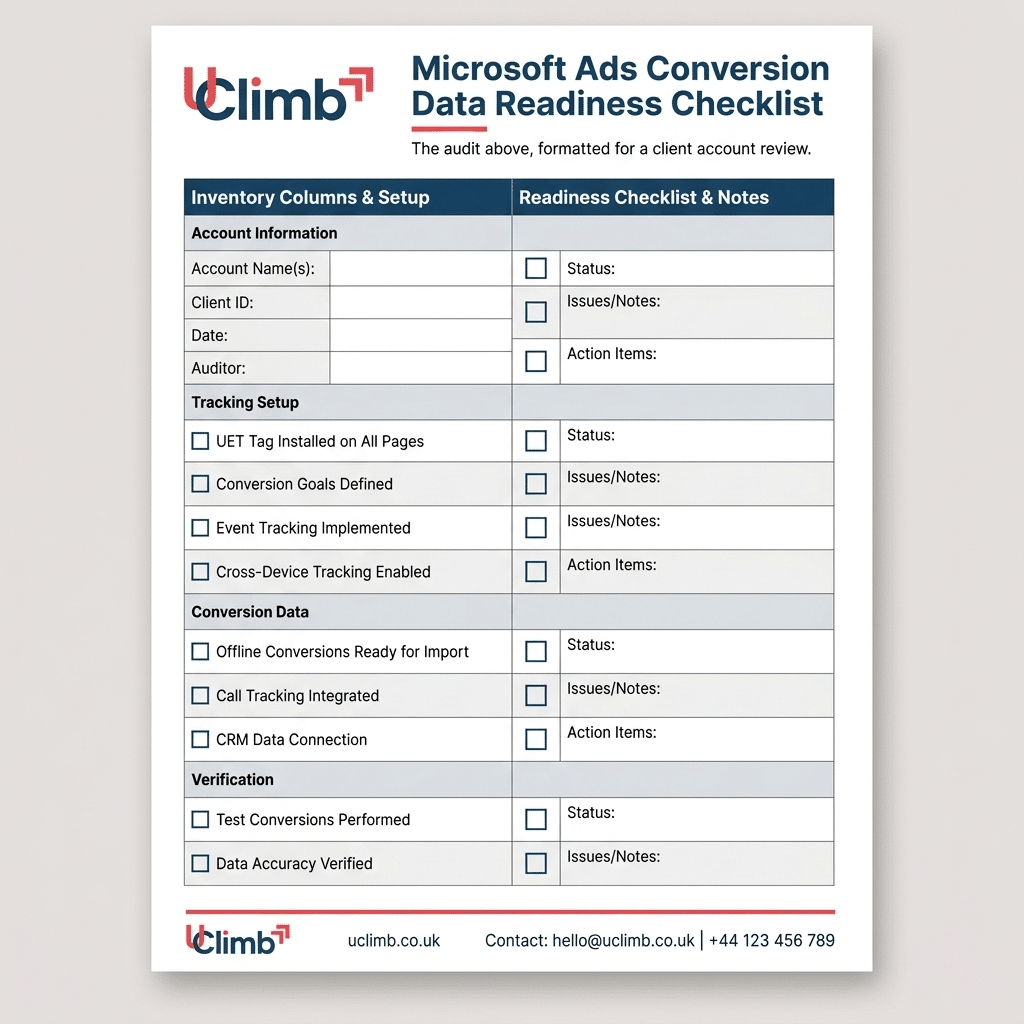
Removing a cost ceiling is only safe if the signals replacing it are honest. Audit these before 1 October, not after.
| Check | What good looks like |
|---|---|
| Conversion actions | Only genuine business outcomes count as primary conversions |
| Duplicate tracking | One conversion action per outcome, no double counting across tags |
| Count setting | “One” for lead generation, “Every” for ecommerce transactions |
| Conversion values | Real values attached, not a flat placeholder on every action |
| Value differentiation | A high-value enquiry is not worth the same as a newsletter signup |
| Conversion value rules | Applied where location, device or audience genuinely changes worth |
| Import lag | Offline conversions arriving inside the attribution window |
Microsoft specifically recommends conversion value rules as a way of telling the bidding system which conversions matter more. In a lead generation account with no values attached at all, the algorithm is optimising for volume of anything. That was survivable with a cap. It is considerably less survivable without one.
The three-week plan
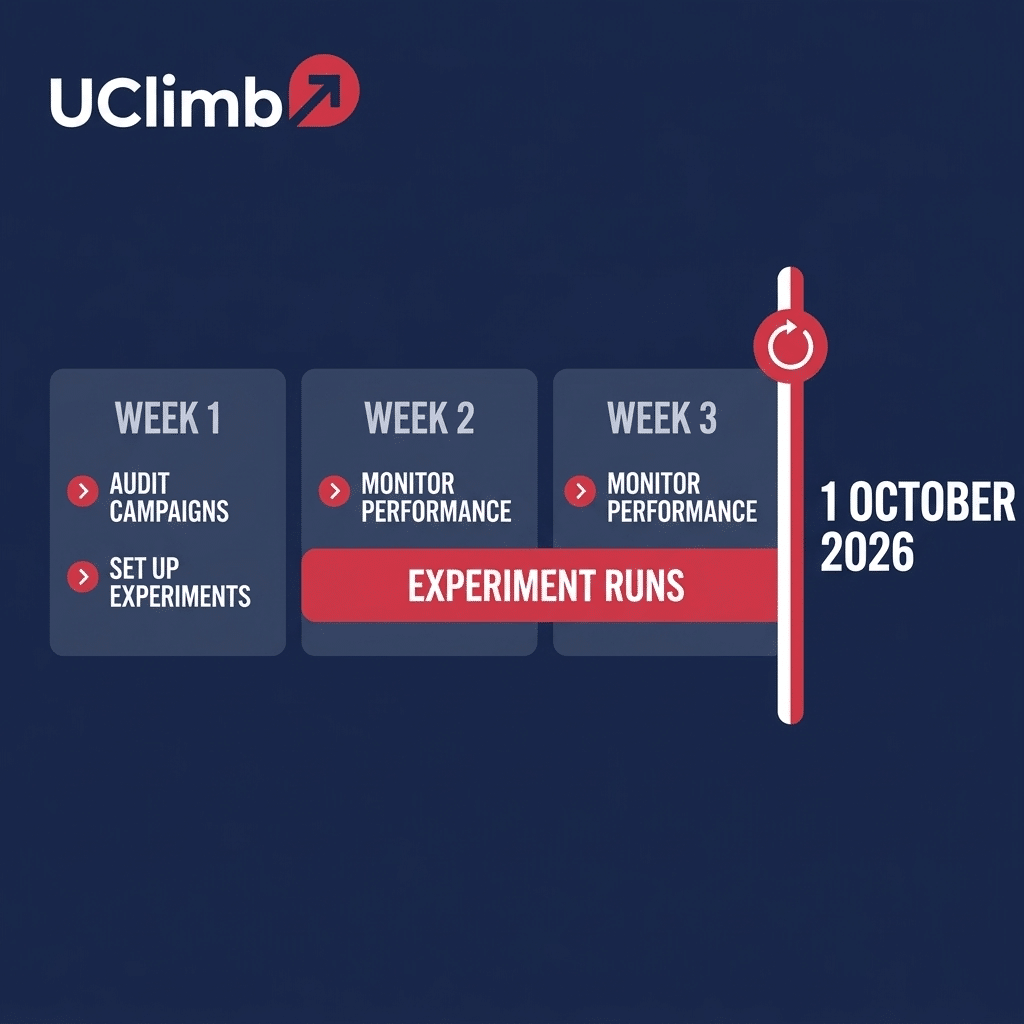
| Week | Action | Output |
|---|---|---|
| Week 1 | Inventory all campaigns with a Max CPC, calculate cap versus average CPC gap | Ranked list by risk |
| Week 1 | Audit conversion actions, counting and values | Fix list, actioned before testing |
| Week 2 | Launch 50/50 experiments on highest-volume campaigns | Live tests with a fortnight to run |
| Week 2 | Identify campaigns needing a genuine ceiling | Portfolio migration shortlist |
| Week 3 | Read results on cost per conversion, volume and lost impression share | Keep or remove decision per campaign |
| Week 3 | Document every retained cap and brief clients in writing | Client comms sent before the deadline |
Note that the experiments launched in week two report in week three, which is why the inventory has to happen in week one. Start later and you are making the decision without the data.
The wider pattern worth naming
This is not an isolated decision, and reading it as one leads to the wrong response.
Manual bid ceilings have been withdrawn steadily across every major platform. Microsoft moved native image and feed campaigns off manual CPC for new campaigns from 30 April 2024. Google announced the deprecation of Enhanced CPC for Search and Display in September 2024 and completed the removal in March 2025. Microsoft consolidated its own bidding strategies in August 2025. Now the CPC ceiling goes for new standalone campaigns.
The direction has been consistent for two years, and the strategic implication is straightforward: the controls that survive are the ones tied to business outcomes, not to auction mechanics.
Budgets, targets, conversion values and value rules are the levers that still work. Every account whose performance depends on a bid ceiling is running on borrowed time, and the accounts that will handle the next removal comfortably are the ones fixing their conversion data now.
That is the work our PPC agency services exist to do, because measurement quality and bidding strategy stopped being separate problems some time ago.
Frequently asked questions
When is Microsoft removing Max CPC?
From 1 October 2026, Max CPC will no longer be available when creating new non-portfolio campaigns using standalone Maximise Conversions, Maximise Conversion Value or Maximise Clicks bidding strategies.
Will I lose Max CPC on my existing campaigns?
Not on 1 October. Campaigns created before that date retain the setting. Microsoft has said further updates about the future of Max CPC will be provided later, so treat the exemption as current rather than permanent.
Can I still use Max CPC on new campaigns after 1 October?
Yes, if the campaign uses a portfolio bid strategy. Portfolio strategies retain Max CPC for both new and existing campaigns, as do Target Impression Share and Enhanced CPC.
Does this affect Microsoft Advertising Editor and the API?
Microsoft has said the setting will also be removed from Editor, and that an API update is expected, but no dates have been announced for either.
Should I remove Max CPC from my existing campaigns now?
Not without testing. Run a 50/50 optimisation experiment for at least two full weeks on a campaign with enough conversion volume to read, and judge it on cost per conversion and conversion volume rather than average CPC.
What replaces Max CPC as a cost control?
Campaign budget, target CPA or target ROAS, conversion values and conversion value rules. Microsoft’s position is that these communicate business outcomes more effectively than a click-level ceiling.
Why is Microsoft removing Max CPC?
Microsoft says a Max CPC can override an advertiser’s stated performance goal and cause spend pacing irregularities, including when the cap sits above the campaign’s average CPC.
How UClimb handles this for clients
We are working through every Microsoft Advertising account we manage before the deadline: inventorying campaigns that carry a Max CPC, measuring each cap against actual average CPC, and separating the caps doing real commercial work from the ones set once at build and never revisited.
Where a cap is binding and necessary, we document why and plan the portfolio route for new campaigns. Where it is decorative, we test its removal now while the test is still reversible, rather than discovering the answer on a campaign launched in November.
The conversion data audit comes first in every case, because handing more freedom to an algorithm reading distorted signals is how this change goes wrong.
If you run Microsoft Ads through Google Import and cannot say which of your campaigns carry a Max CPC or why, three weeks is enough time to fix that. It will not be after 1 October.
Book a Microsoft Ads account review with UClimb and we will tell you which of your caps are protecting you, which are costing you, and what to do before the deadline.
Sources and credit
The change was announced by Microsoft Advertising by email on 20 August 2026 and detailed publicly the same day by Navah Hopkins, Microsoft Advertising Liaison, on LinkedIn. Anu Adegbola covered it for Search Engine Land and Barry Schwartz for Search Engine Roundtable.
| Source | Used for |
|---|---|
| Navah Hopkins on LinkedIn | Microsoft’s reasoning, retained strategies, experiment advice |
| Search Engine Land, 20 August 2026 | Change detail and Microsoft’s recommended replacements |
| Search Engine Roundtable, 21 August 2026 | The email text and Hopkins’ full statement |
| Search Engine Journal | Editor and API status |
| PPC Land | Timeline of manual bid control removals across platforms |
The cap versus average CPC diagnostic, the experiment protocol, the conversion readiness audit and the three-week plan are ours.

